
Graphite for conductive systems
Graphite can act as a conductive filler in coatings and polymer compounds. Conductivity depends on the graphite, its distribution and the finished material system, so selection begins with the electrical target.
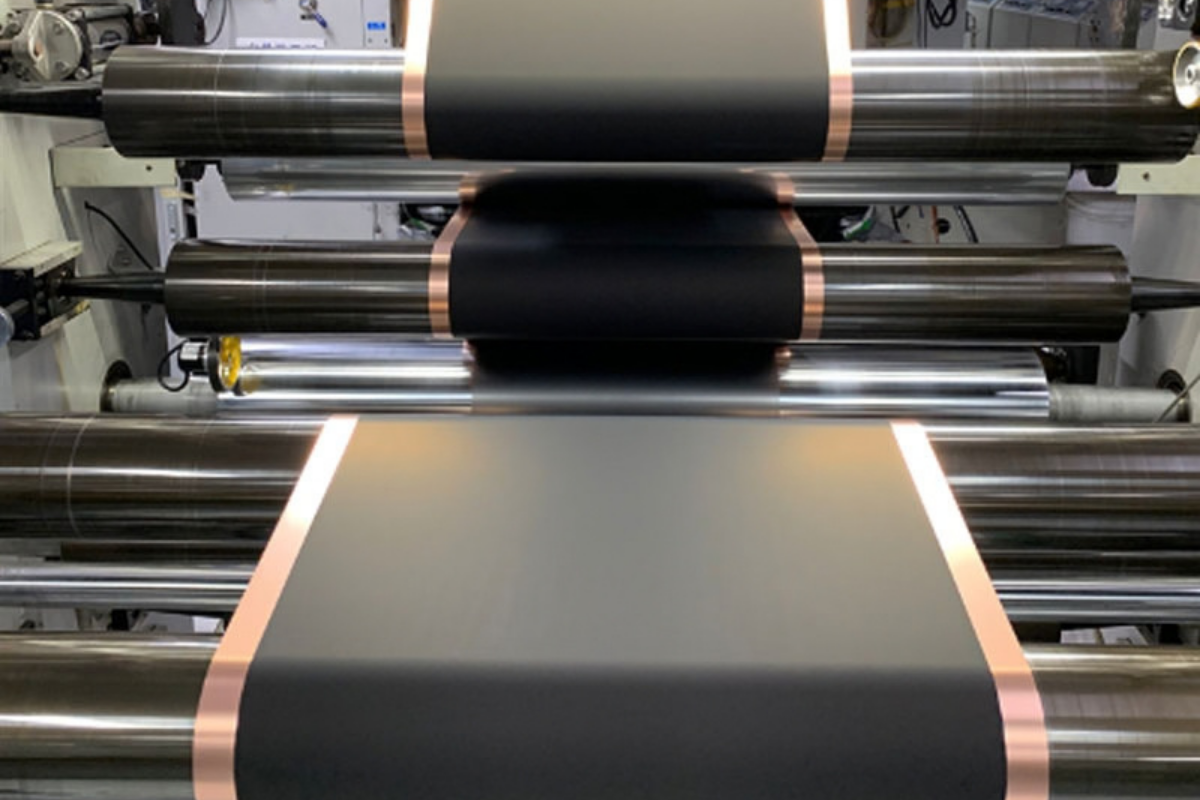
Electrical pathways
Graphite particles can form a conductive network.
Functional filling
Consider graphite within coatings and compounds.
Processing balance
Balance dispersion, particle size and filler loading.
Where graphite is used
Identify the process first, then review the role of graphite and the requirements that guide selection.
Conductive coatings
ROLE OF GRAPHITEGraphite-containing coatings for evaluated electrical functions.
SELECTION FOCUSResistivity target · binder · film thickness
Polymer & rubber compounds
ROLE OF GRAPHITEConductive filler in suitable compound systems.
SELECTION FOCUSMatrix · filler loading · processing
Antistatic materials
ROLE OF GRAPHITEFormulations designed for a defined resistance range.
SELECTION FOCUSSurface / volume resistance · method · environment
Define the electrical target first
Powder properties and finished-part results differ.
Particle contacts, orientation and the surrounding matrix determine the conductive path. Specify whether the target is a powder measurement, coating result or finished compound property.
Start with the right graphite
Discuss the material family together with your specification and operating conditions.
| Material family | Application starting point | What to confirm |
|---|---|---|
| Conductive graphite | APPLICATION STARTING POINTCandidate filler for conductive formulations | WHAT TO CONFIRMElectrical target, test method and matrix |
| Micronized graphite | APPLICATION STARTING POINTFine graphite for size-sensitive coatings or compounds | WHAT TO CONFIRMParticle distribution, loading and dispersion |
| Natural flake graphite | APPLICATION STARTING POINTFlake filler where the formulation benefits from its shape | WHAT TO CONFIRMFlake structure, orientation and process compatibility |
Before you select a grade
Practical questions to help make your requirements clear.
Can powder resistivity predict a finished coating?
A powder result does not directly establish finished-coating performance. Binder, dispersion, loading, film thickness and the test method all matter.
Are all conductive applications battery applications?
No. This page covers coatings, compounds and antistatic materials. A battery application requires its own chemistry, grade and qualification review.
What should I send for a conductivity inquiry?
Include the material system, target resistance or resistivity with units, test method, filler loading and processing constraints.
Natural graphite portfolio
Flake, micronized and other graphite-based product families.
Specification discussion
Share particle size, purity and application requirements.
Sales & after-sales support
Discuss product selection and follow-up needs.
Let’s discuss your graphite requirements.
Send your application, target specification and required quantity to start a focused product discussion.